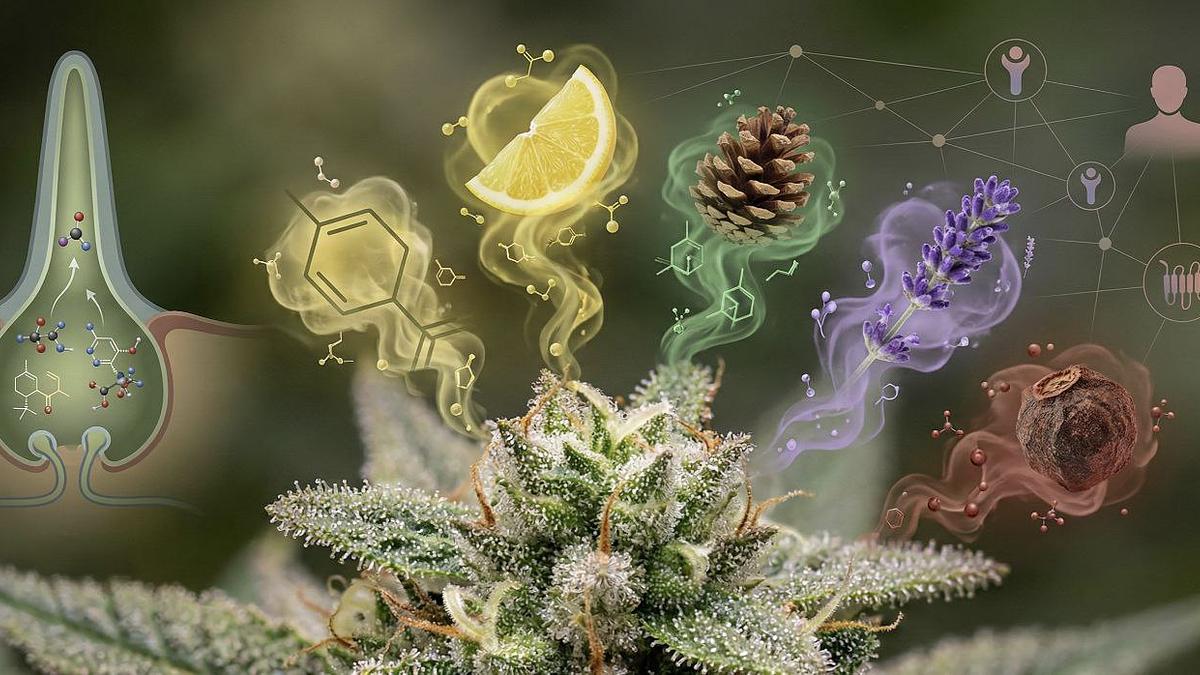
Architects of the High: A Deep Dive into Terpene Biochemistry
For a long time, the cannabis conversation was dominated by a single metric: THC percentage. We fell into the trap of believing that "more THC equals a better high." However, modern science is debunking this "THC-only" myth. The true "conductors" of your experience are terpenes.
In this article, we’ll explore how these volatile molecules function at a molecular level and why they are the most critical factor in determining the character of your cannabis.
1. Biosynthesis: How the Plant Creates Magic
Terpenes are a class of organic hydrocarbons built from isoprene units (). In cannabis, they are synthesized within the glandular trichomes—the same microscopic "chemical factories" where cannabinoids like THC and CBD are produced.
Intriguingly, cannabinoids and terpenes share a common chemical precursor: geranyl pyrophosphate. Depending on genetics and environmental stressors, the plant "decides" whether to allocate resources toward cannabinoids or aromatic defense compounds.
Why do terpenes exist?
They aren't there for our enjoyment; they are survival tools:
-
Protection: Bitter or pungent terpenes repel hukerbivores and insects.
-
Thermoregulation: By evaporating, they help cool the surface of the flower.
-
Antimicrobial: Many terpenes act as natural fungicides, protecting the plant from bud rot and mold.
2. The Entourage Effect: Pharmacological Synergy
The concept of the Entourage Effect, popularized by Dr. Ethan Russo, suggests that isolated THC has a much narrower therapeutic window than the whole plant. Terpenes modulate the effects of cannabinoids through several mechanisms:
-
BBB Permeability: Certain terpenes can make the Blood-Brain Barrier more permeable, allowing cannabinoids to enter the brain more efficiently.
-
Allosteric Modulation: They can bind to CB1 and CB2 receptors alongside THC, changing the receptor's shape. This can "turn down the volume" on THC-induced anxiety or "amplify" its pain-relieving properties.
-
Neurotransmitter Interaction: Many terpenes interact with the same systems as pharmaceutical drugs, such as GABA (sedatives) or Serotonin (antidepressants).
3. The Expanded Terpene Catalog
While there are over 150 terpenes found in cannabis, a few "major" ones dictate the primary effects.
4. Terpenes vs. Terpenoids: What’s the Difference?
While often used interchangeably, there is a technical distinction:
-
Terpenes are the "live" molecules found in the growing or freshly harvested plant.
-
Terpenoids are terpenes that have undergone oxidation. This process occurs during drying and curing.
Proper curing transforms harsh "green" smells into a deep, complex bouquet. If your flower smells like hay, it’s a sign that the terpenes have degraded and the chlorophyll hasn't broken down correctly.
5. Lab Analysis (COA): How to Read the Results
In mature markets, savvy consumers look for a Certificate of Analysis (COA) rather than just THC potency.
-
Total Terpenes: A good range is 1.5% to 4%. Anything above 4% is considered elite "top-shelf" craft cannabis.
-
Dominant Terpenes: Look at the top three. If Myrcene is #1, expect heavy relaxation. If Limonene or Pinene are dominant, expect a more mental, uplifting experience.
6. The Art of Preservation
You can buy the best genetics in the world, but poor handling will destroy the terpene profile:
-
Temperature: Terpenes begin to evaporate at temperatures as low as 21°C (70°F). Store your flower in a cool, dark place.
-
Humidity: Maintain a Relative Humidity (RH) of 58-62%. Over-dried flower loses its "terpene shield," causing the trichomes to become brittle and lose their aromatic core.
-
Mechanical Stress: Every time you touch the buds with your bare hands, you rupture the trichomes. Use a grinder only immediately before consumption.
Conclusion
Terpenes are the "intelligence" of the plant. If THC provides the "altitude" of the flight, terpenes are the pilot, deciding whether you land in a state of deep sleep, creative flow, or social energy. The next time you open a jar, take a moment to appreciate the aroma—your nose knows more about the quality of that cannabis than any marketing label.