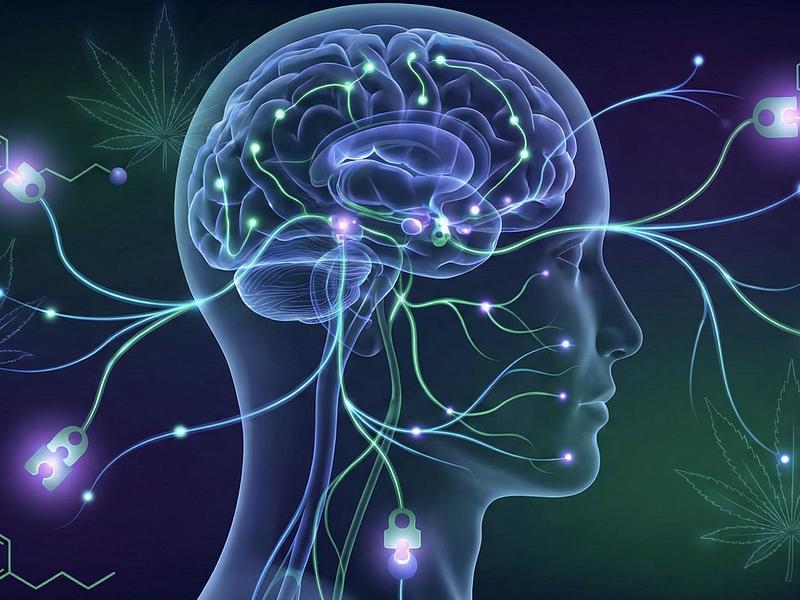
The Architecture of Homeostasis: A Deep Dive into Cannabinoids and the ECS
For decades, cannabinoids were viewed strictly through the lens of the psychoactive effects of a single plant. However, modern science has uncovered something far more profound: the Endocannabinoid System (ECS)—a sophisticated cellular communication network that has existed in almost all vertebrates for over 600 million years. 1. The ECS: The Master Regulator The ECS is not merely a collection of receptors; it is the "Master Engineer" of homeostasis. Its primary mission is to maintain internal stability regardless of external fluctuations. It regulates everything from neuroplasticity and immune response to metabolism and sleep cycles. The core components of the ECS include: Receptors (CB1 and CB2): The "locks" sitting on the surface of our cells. Endocannabinoids: The "keys" produced naturally by our bodies (Anandamide and 2-AG). Enzymes: The "cleanup crew" (FAAH and MAGL) that breaks down cannabinoids once their job is done. The Mechanism of Retrograde Signaling In a unique twist of biology, cannabinoids function through retrograde signaling. Unlike most neurotransmitters (like dopamine or serotonin) that travel from a "sender" neuron to a "receiver," endocannabinoids travel backward. This allows the body to literally "turn down the volume" on neural overstimulation, preventing excitotoxicity (damage to nerve cells). 2. Phytocannabinoids: Botanical Alchemy While science has identified over 120 cannabinoids in the Cannabis Sativa plant, the spotlight usually stays on THC and CBD. For the true enthusiast, however, the real magic lies in the "minor" compounds. THC (Tetrahydrocannabinol) A direct agonist of CB1 receptors. Its role goes far beyond euphoria; it possesses potent analgesic and antioxidant properties, mimicking our own "bliss molecule"—anandamide. CBD (Cannabidiol) Unlike THC, CBD has a low affinity for CB1/CB2 receptors. Instead, it acts as a negative allosteric modulator. In simpler terms, it changes the shape of the receptor so that THC or endocannabinoids bind differently, reducing anxiety and inflammation without direct psychoactivity. New Horizons: CBG, CBN, and THCV CBG (Cannabigerol): Known as the "stem cell" of cannabinoids. It is currently being researched as a powerful neuroprotector for conditions like Huntington’s disease. CBN (Cannabinol): A byproduct of THC oxidation, noted for its potential sedative properties. THCV (Tetrahydrocannabivarin): Unique for its ability to suppress appetite and potentially regulate blood sugar, making it a focal point for metabolic syndrome research. 3. The Entourage Effect: Synergy in Action This is the concept that isolated cannabinoids are often less effective than their natural combination. Terpenes (aromatic molecules like myrcene or limonene) and flavonoids work in synergy with cannabinoids, potentially altering their permeability across the blood-brain barrier or modulating their intensity. Key Insight: Pure CBD isolate may require significantly higher doses to achieve a therapeutic effect compared to a full-spectrum extract, where the "teamwork" of various molecules creates a more efficient biological response. 4. The Future: Personalized Cannabinoid Medicine We are entering an era where cannabinoid use will be guided by an individual's genetic profile. For instance, genetic variations in the FAAH enzyme can determine why one person feels profound calm from cannabinoids while another may experience heightened anxiety. Promising Research Frontiers: Autoimmune Treatment: Utilizing CB2-selective agonists to modulate the immune system without affecting cognitive function. The Microbiome: Exploring the bidirectional link between the ECS and gut flora. Oncology: Investigating the mechanisms of apoptosis (programmed cell death) in cancer cells triggered by high concentrations of phytocannabinoids. Conclusion Cannabinoid science is about more than just medicine or recreation; it is the key to understanding how our bodies maintain the delicate balance of life. We are only at the beginning of decoding this intricate molecular language.